The 6th International Conference on Natural Language Processing for the Digital Humanities (NLP4DH 2026) will be organized together with ACL 2026. The proceedings of the conference will be published in the ACL anthology. The conference will take place in San Diego, USA on July 4, 2026.
| Time | Event |
|---|---|
| 09:00–09:30 | Virtual Posters Gather |
| 09:30–09:45 | Opening Remarks |
| 09:45–10:15 | Keynote: Sophie Hao (Boston University) |
| 10:30–11:30 | Coffee |
| 11:30–13:00 | Session 1: Historical & Multilingual Texts — Chair: Sil Hamilton |
| 11:30 | Scaling Sentence Similarity for Classical Tibetan |
| 11:45 | |
| 12:00 | Tracing Thematic Change in Early English-Language Sci-Fi, 1818–1930 |
| 12:15 | From Traditional Taggers to LLMs: A Comparative Study of POS Tagging for Medieval Romance Languages |
| 12:30 | Lost in Translation? Grammatical Gender from Latin to Occitan |
| 12:45 | In Search of Lost Adventure Novels |
| 13:00–14:00 | Lunch |
| 14:00–14:30 | |
| 14:30–15:30 | Session 2: LLMs & Cultural Analysis — Chair: Yuri Bizzoni |
| 14:30 | Directional Alignment and Narrative Agency in Human–LLM Co-Writing |
| 14:45 | MADRAG: Multi-Agent Debate with Retrieval-Augmented Generation for Training-Free Analytic Essay Scoring |
| 15:00 | Narrative Landscape: Mapping Narrative Dispositions Across LLMs |
| 15:15 | Between Whispers and Screams |
| 15:30–16:30 | Coffee |
| 16:30–17:30 | In-Person Posters Regatta 73 |
Paper submission
We solicit original and unpublished work related to digital humanities and natural language processing (NLP4DH). Short papers can be up to 4 pages in length and long papers up to 8 pages. Both submission formats can have an unlimited number of pages for references. All submissions must follow the ACL stylesheet (Overleaf template).
The submissions must be anonymous and they will be peer-reviewed by our program committee. The peer review is double blind.
Papers must be submitted using OpenReview by the submission deadline. At least one of the authors of an accepted paper must attend the event to present the paper. NAACL 2025 is in charge of collecting registration fees.
We also accept papers already reviewed in the ACL Rolling Review (ARR) that have not been committed to another venue. A paper that already has reviews through ARR may not be submitted for direct review to NLP4DH, but must use the ARR submission track and provide the URL to the OpenReview forum of the ARR submission (https://openreview.net/forum?id=XXXXXXXXXXX).
Accepted papers (short and long) will be published in the proceedings that will appear in the ACL Anthology. Accepted papers will also be given an additional page to address the reviewers’ comments. The length of a camera ready submission can then be 5 pages for a short paper and 9 for a long paper with an unlimited number of pages for references.
The authors of the accepted papers will be invited to submit an extended version of their paper to a special issue in the Journal of Data Mining & Digital Humanities.
Lightning talk submission
You may also contribute to the event by submitting a lightning talk. Lightning talks are submitted as 750-word abstracts using Google Forms. Lightning talks are suited for discussing ideas or presenting work in progress. The lightning proceedings will be published on Zenodo. NAACL 2025 is in charge of collecting registration fees.
Important dates
- Direct paper submission (long and short): February 23, 2025
- ARR commitment submission: February 23, 2025
- Notification of acceptance: March 10, 2025
- Camera ready deadline: March 23, 2025
- Conference: May 3-4, 2025
All times are Anywhere on Earth (AoE).
If you have any questions, you can email mika.hamalainen@metropolia.fi
Main Track
The focus of the conference is on applying natural language processing techniques to digital humanities research. The topics can be anything of digital humanities interest with a natural language processing or generation aspect.
A list of suitable topics includes but is not limited to:
- Applying techniques from mechanistic interpretability for DH purposes.
- Generating or appraising human-written narratives with LLMs and other NLP systems.
- Assessing cultural bias in model output and behaviour, especially in a multilingual setting.
- Data provenance, including examining pre- and post-training sets.
- NLP for cultural heritage collections and research connected to galleries, libraries, archives and museums.
- OCR, including automatic error detection and cleaning of textual data.
Special Track: Reinterpreting NLP
We seek works that critically inspect LLM training set characteristics, creatively adapt techniques from mechanistic interpretability for humanities purposes, and bolster NLP techniques with humanities-centric intuition. We seek DH for NLP. This includes topics such as:
- Critical methods for interpreting LLM behaviour
- Studies contextualizing NLP techniques, including LLMs, use in different social contexts
- Humanities-inspired pre-training and post-training
- Recovering useful latent structures from pre-trained LLM
- Philosophical considerations of NLP techniques, including LLMs
- And more.
Paper submission
We solicit original and unpublished work related to digital humanities and natural language processing (NLP4DH). Short papers can be up to 4 pages in length and long papers up to 8 pages. Both submission formats can have an unlimited number of pages for references. All submissions must follow the ACL stylesheet (Overleaf template).
The submissions must be anonymous and they will be peer-reviewed by our program committee. The peer review is double blind.
Papers must be submitted using OpenReview by the submission deadline. ACL 2026 is in charge of collecting registration fees. Remote participation will be allowed.
We also accept papers already reviewed in the ACL Rolling Review (ARR) that have not been committed to another venue. A paper that already has reviews through ARR may not be submitted for direct review to NLP4DH, but must use the ARR submission track and provide the URL to the OpenReview forum of the ARR submission (https://openreview.net/group?id=NLP4DH.com/2026/Conference).
Accepted papers (short and long) will be published in the proceedings that will appear in the ACL Anthology. Accepted papers will also be given an additional page to address the reviewers’ comments. The length of a camera ready submission can then be 5 pages for a short paper and 9 for a long paper with an unlimited number of pages for references.
The authors of the accepted papers will be invited to submit an extended version of their paper to a special issue in the Journal
Important dates
Direct paper submission (long and short):March 5, 2026- Extended! Direct paper submission (long and short): March 13, 2026
ARR commitment submission:March 24, 2026Notification of acceptance:May 6, 2026- Camera ready deadline: May 8, 2026
- Conference: July 4, 2026
All times are Anywhere on Earth (AoE).
If you have any questions, you can email Sil Hamilton at srh255@cornell.edu.
Invited Speakers
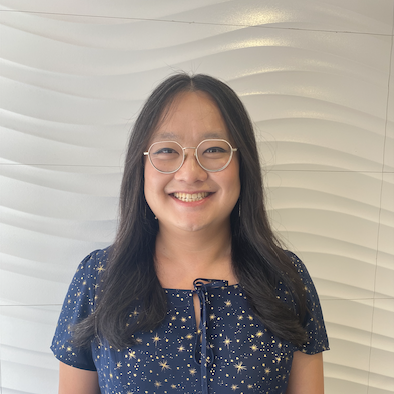
Boston University

AI2
Organizers
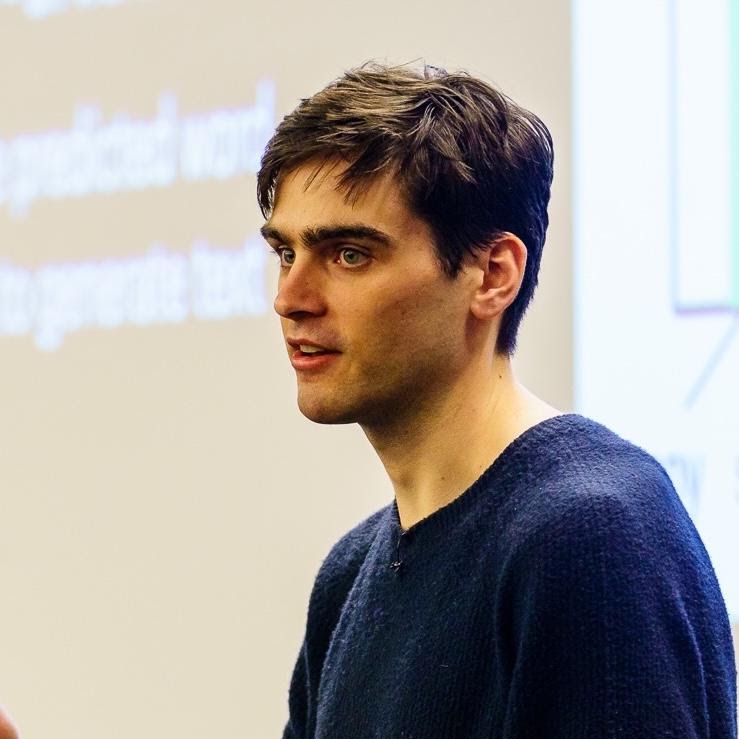
Cornell University
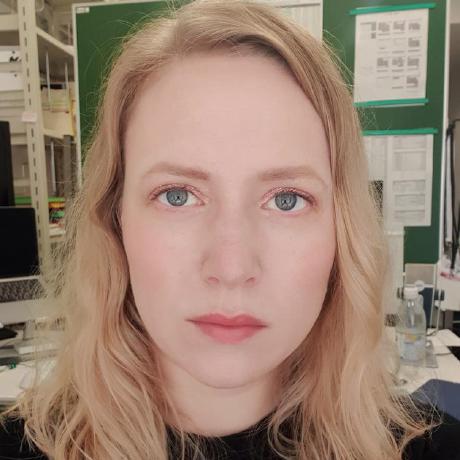
Waseda University
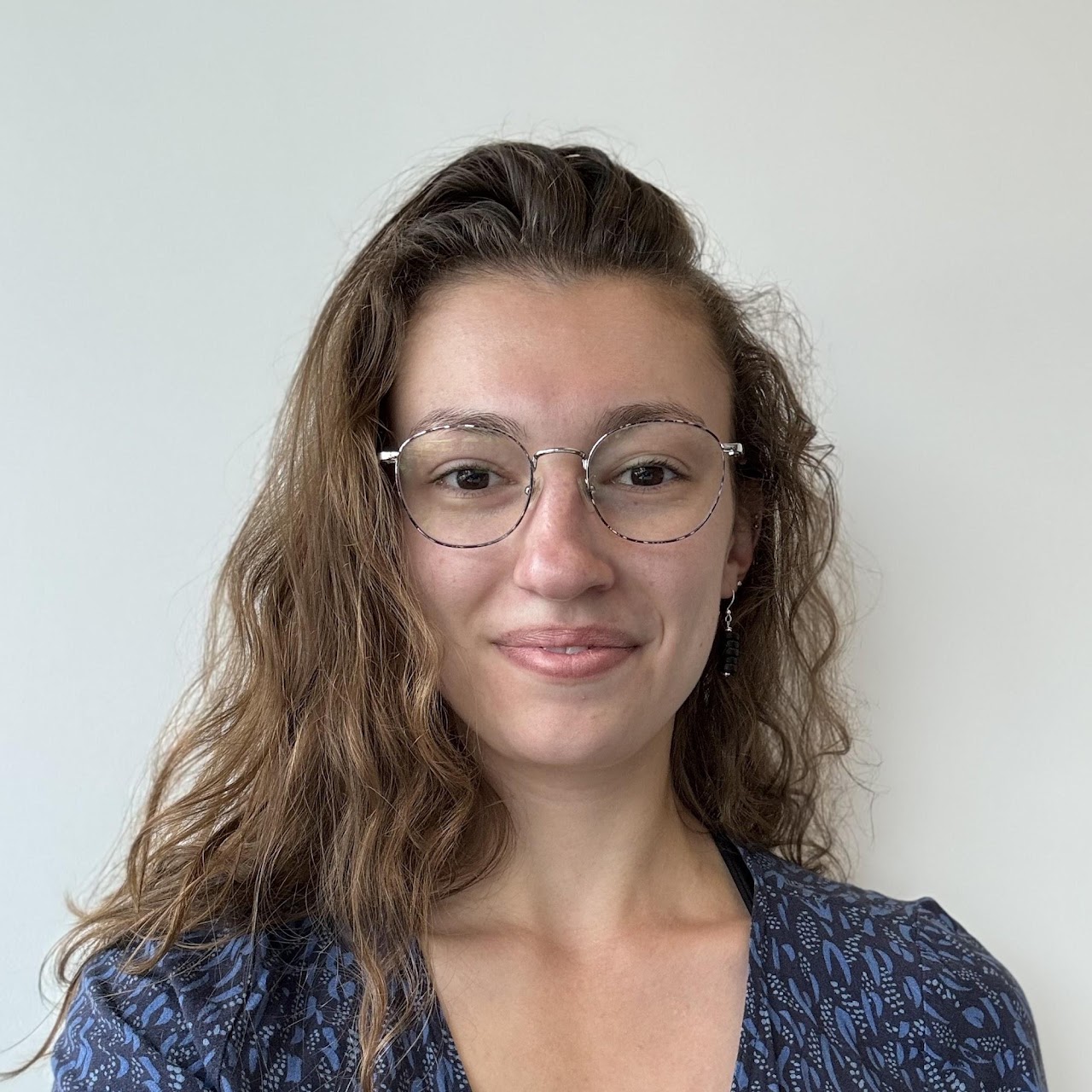
Cornell University

Aarhus University

Cornell University

Cornell University

Metropolia University of Applied Sciences
Program Committee
Hale Sirin, Johns Hopkins University
Thibault Clérice, INRIA Paris - Almanach
Noémi Ligeti-Nagy, Hungarian Research Centre for Linguistics
Anna Dmitrieva, University of Helsinki
Frederik Arnold, Humboldt Universität Berlin
Dongqi Liu, Universität des Saarlandes
Won Ik Cho, Samsung Advanced Institute of Technology
Konstantin Schulz, Humboldt Universität Berlin
Aynat Rubinstein, Hebrew University of Jerusalem
Alejandro Sierra Múnera, Hasso Plattner Institute
Tim Fischer, University of Hamburg
Shu Okabe, Technische Universität München
Ronja Laarmann-Quante, Ruhr-Universtät Bochum
Yoshifumi Kawasaki, The University of Tokyo
Klara Venglarova, Universität Graz
Youngsook Song, Sionic AI
Joshua Wilbur, University of Tartu
Keito Inoshita, Shiga University
Kenichi Iwatsuki, Mirai Translate
Piper Vasicek, Brigham Young University
Mohammed Attia, Google
Laura Manrique-Gómez, Universidad de Los Andes
Craig Messner, Johns Hopkins University
Abhai Pratap Singh, Carnegie Mellon University
Balázs Indig, Eötvös Lorand University
Anton Eklund, Umeå University
Jouni Tuominen, University of Helsinki
Jesse Roberts, Tennessee Technological University
Nikita Neveditsin, St. Mary’s University
William Thorne, University of Sheffield
Lev Kharlashkin, Metropolia University of Applied Sciences
Jonne Sälevä, Brandeis University
Gleb Schmidt, Radboud University
Erik Henriksson, University of Turku
Amanda Myntti, University of Turku
Erkki Mervaala, University of Helsinki
Jay Park, Nanyang Technological University
Lama Alqazlan, University of Warwick
Pascale Moreira, Aarhus University
Enrique Manjavacas, Arevalo University of Leiden
Chahan Vidal-Gorène, École Nationale des Chartes
Lucija Krusic, Karl-Franzens-Universität Graz
Lidia Pivovarova, University of Helsinki
Iana Atanassova, University of Franche-Comté
Sebastian Oliver Eck, University of Oxford
Shuo Zhang, Bose Corporation
Tomasz Walkowiak, Wroclaw University of Science and Technology
Elissa Nakajima, Wickham Waseda University
Nicolas Gutehrlé, University Bourgogne Franche-Comté
Hanna-Mari Kupari, University of Turku
Sourav Das, Indian Institute of Information Technology Kalyani
Antti Kanner, University of Helsinki
Julie-Anne Meaney, University of Edinburgh
Eetu Mäkelä, University of Helsinki
Fotini Koidaki, University of Crete
Yuzuki Tsukagoshi, University of Tokyo
Quanqi Du, Ghent University
Hugo Gonçalo Oliveira, Universidade de Coimbra
Maciej Kurzynski, Lingnan University
Xinmeng Hou, Columbia University
Sijia Ge, University of Cincinnati
Mary Ogbuka Kenneth, Imperial College London
Mina Rajaei Moghadam, Northern Illinois University
Quan Duong, University of Helsinki
Mohamed Hannani, Universität Siegen
Pascale Feldkamp, Aarhus University
Eiaki Morooka, Metropolia University of Applied Sciences
Jahnavi Anilkumar Kachhia, Facebook
Rynaa Grover, Google
Milavkumar Sha, IEEE
Pratik Aher, Meta
Kunal Chhabaria, Walmart Connect
Elena Klyachko, HSE University
Yulia Badryzlova, Higher School of Economics
Mariia Fedorova, University of Oslo
Kiara Liu, Cornell University
Sophie Wu, McGill University
Aatu Liimatta, University of Helsinki
Jaihyun Park, Indiana University Indianapolis